Fall in Lighthouse Point doesn't show up as a temperature drop or a color change. It shows up on the water first, in three places that all move on the same clock: the fish start stacking up at Hillsboro Inlet, the lighthouse's tour boat starts filling faster, and the reservation line at the one restaurant you can't drive to gets longer. None of that is seasonal decoration. It's the actual mechanism that separates a Lighthouse Point September from a Lighthouse Point December, and it has almost nothing to do with a calendar page.
The Season Turns at the Inlet, Not the Thermostat
Hillsboro Inlet has a stretch of water anglers call Sailfish Alley, and fall and winter are when it earns the name. Sailfish, blue and white marlin, and swordfish all move through in greater numbers once the water cools, which is exactly the stretch the calendar is entering now. The prize for a serious day out here is the Billfish Grand Slam: catching and releasing a sailfish, a blue marlin, and a swordfish in the same day. Blackfin tuna run closer to year round, with spring as their peak, but they're still a reliable catch through the fall months too.
The size differences explain why the season matters as much as the species list.
| Species | Typical weight | Peak season |
|---|---|---|
| Sailfish | 50 to 70 pounds | Fall and winter |
| Blue/white marlin | Up to ten times a sailfish's weight | Fall and winter |
| Swordfish | Over 100 pounds, sometimes five times that | Fall and winter, night fishing productive |
| Blackfin tuna | Smaller than yellowfin or bluefin | Year-round, peaks in spring |
A sailfish that fights like the fastest thing in the ocean is one thing. A marlin ten times its size on the same stretch of water a few weeks later is a different fishing season entirely, and it's why charter bookings out of the inlet pick up as September turns to October rather than waiting for an actual cold front.
One Way In, About a Dozen Days a Year
The Hillsboro Inlet Lighthouse sits at the edge of that same water, and it has one of the strangest access rules of any landmark in Broward County. There's no road to it. The only way to stand at its base is to join the Hillsboro Lighthouse Preservation Society and show up for one of the roughly twelve public tours the all-volunteer group runs each year, each one requiring a short boat ride out and a boat ride back.
Once you're there, you're climbing 175 steps up a spiral staircase to reach a Fresnel lens that's genuinely worth the trip. It's a second-order bivalve lens added in 1907, weighing 3,500 pounds and built from 356 individual glass pieces arranged into a diamond pattern. It's also one of the few Fresnel lenses in the country still actively rotating rather than serving as a museum piece behind glass, and its beam is visible 28 miles out to sea. The lighthouse itself was built in Detroit in 1906 and shipped 4,000 nautical miles to reach this inlet, five years after Congress finally authorized construction on a passage the Army Corps of Engineers had flagged as hazardous back in 1855.
Here's the detail that connects this landmark to the other one on this list. During Prohibition, the lighthouse keeper at the time, Thomas Knight, had a brother named Eugene Theodore Knight, known to everyone as Cap. Cap built a restaurant near the inlet using an old barge and a load of Dade County pine, and he ran it as a speakeasy with rum-running on the side. The keeper's brother's restaurant is still standing, and it's still open. It's called Cap's Place.
The Reservation Book at the End of the Dock
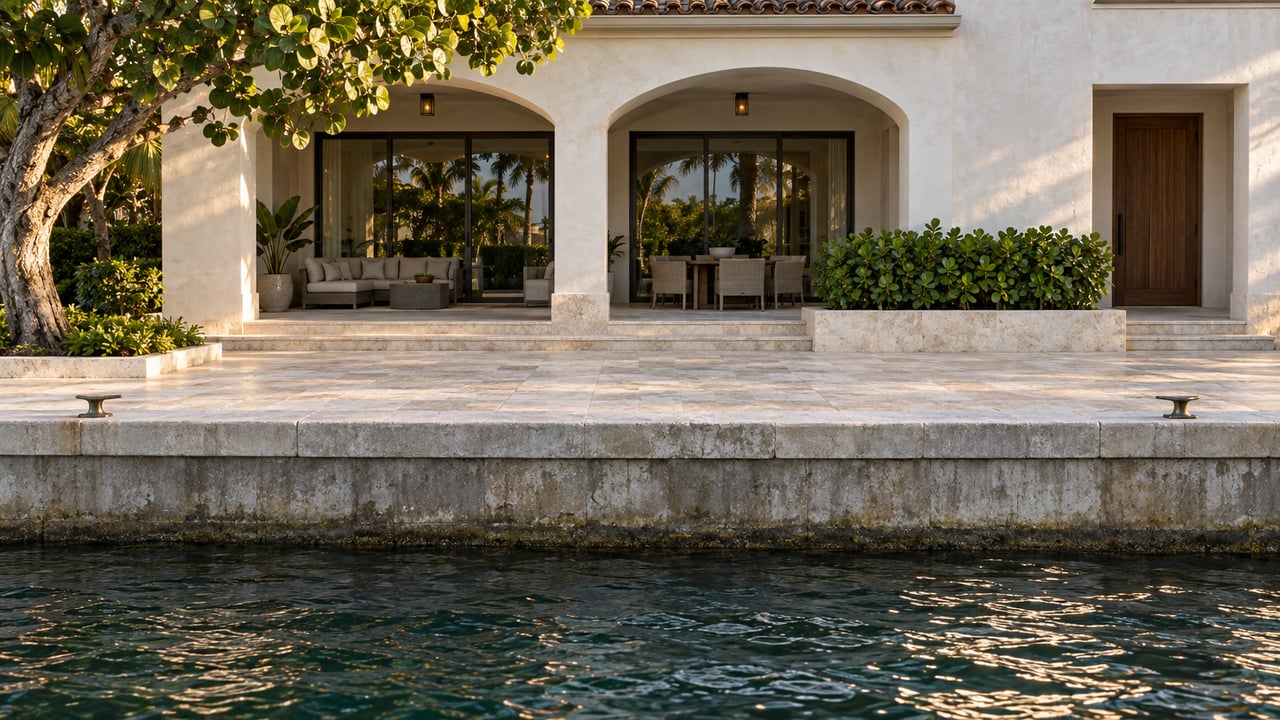
Cap's Place opened in 1928 and it's still Broward County's oldest operating restaurant, closing in on a century in business. There's no parking lot to speak of, no road access at all beyond a handicapped spot. Every diner takes a short launch ride from the dock at Lighthouse Point Marina, a five-minute trip across the water to a peninsula between Lake Placid and the Intracoastal that locals still call Cap's Island.
The building itself is part of the draw. It's a cluster of low-slung wood-frame structures, four of them historic, added to the National Register of Historic Places in 1990. The bar is lit by bare bulbs and covered in vintage photographs and nautical memorabilia, and the same extended family that's run the place since the 1970s, siblings Talle, Ted, and Tom Hasis, still oversees it today. Tom has also served as a Lighthouse Point city commissioner, which tells you something about how small and interconnected this stretch of the city actually is.
According to the restaurant's own history and local accounts collected over the decades, guests have included Al Capone and Meyer Lansky during the gambling-den years, and later a run of entertainers and public figures from Bill Clinton to Johnny Carson. One well-documented 1942 visit involved Franklin Roosevelt and Winston Churchill meeting nearby and later dining at the restaurant, though a wartime news blackout at the time means some of the finer details never made it into contemporary reporting.
The menu leans on whatever's fresh that day: dolphin, wahoo, cobia, snapper, pompano, lobster, stone crab, and a hearts of palm salad that's been on the menu since before most of the neighborhood's houses existed. The restaurant is closed Monday and Tuesday and runs dinner only the rest of the week, which is part of why the reservation line tightens the moment fishing season and snowbird season overlap. If you're planning to bring visitors this fall, the smart move is booking before the boats start filling the marina.
What's Open When the Boat Comes Back In
The dock-to-dinner rotation in Lighthouse Point is short, which makes it easy to actually remember what's where instead of scrolling through an app.
- Nauti Dawg Restaurant & Bar, 2841 Marina Circle, open daily 8 a.m. to 9 p.m. with brunch running the full morning through 3 p.m., is the marina cafe most people hit straight off the boat.
- Le Bistro, on North Federal Highway, runs classic French plates under a Michelin-trained chef and is known for a Beef Wellington that regulars order without checking the rest of the menu.
- Pampa Gaucho Churrascaria handles the Brazilian steakhouse slot, gauchos working the room table to table.
- Sr. Ceviche, at 3100 North Federal Highway, covers Peruvian ceviche and lomo saltado.
- Rocca Trattoria fills the Italian spot in the rotation.
- Red Fox Diner is the breakfast fallback, known locally for coconut French toast.
- Frosty Point Ice Cream Parlor closes out the loop with scoops and dairy-free options for whoever's still out after dinner.
None of this is a large restaurant district by South Florida standards. It's a handful of names along a short stretch of highway and one marina, which is exactly why residents can plan an entire evening around it without needing a reservation app to remember what's even open.
The Marina Is the Actual Clock
The through line here isn't the restaurants or the fish counts on their own. It's that Lighthouse Point's two most distinctive destinations, a working lighthouse and a Prohibition-era restaurant, are both reachable only by water, both tied to the same founding-era family history, and both busier the moment the inlet's fishing season turns over. PORT 32's Lighthouse Point Marina, sitting minutes from the inlet with direct ocean access for vessels of any size, holds a Clean Marina certification from the Florida Department of Environmental Protection and runs its own in-house Gulfstream Boat Club. That marina traffic, boats coming back from summer storage, charters booking earlier mornings, the launch to Cap's Place running a little more often, is the actual signal that the season has turned here. Everything on land follows it.
If you're weighing what it actually means to live somewhere the marina sets the calendar instead of the other way around, that's a conversation worth having before you make an offer, not after. Chad Bishop Group works this stretch of the Fort Lauderdale coastline every day and can walk you through what waterfront access is really worth here.