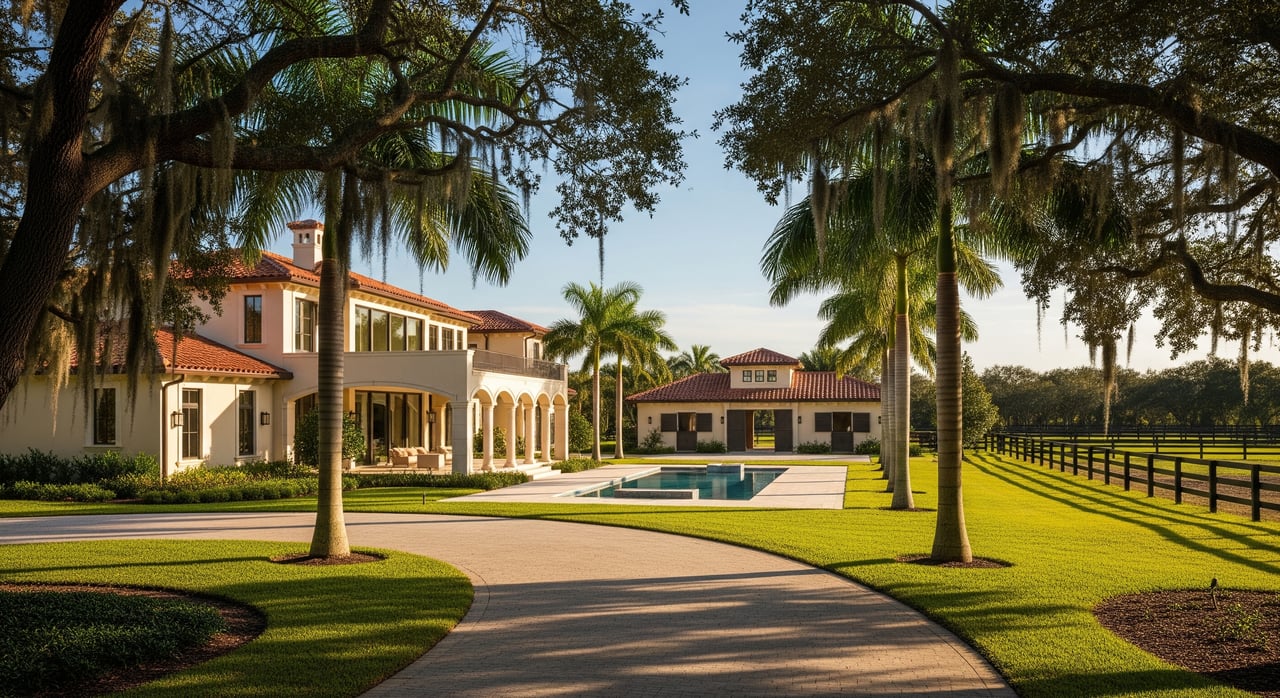
Wondering what your Southwest Ranches estate is really worth? In a market where lots are measured in acres and every property is unique, a quick price-per-square-foot shortcut can mislead you. You want a price that respects your land, your improvements, and your privacy while drawing the right buyers. In this guide, you’ll learn the exact factors that move value in Southwest Ranches, how to select and adjust comps when few exist, and a practical roadmap to set a confident list price. Let’s dive in.
What drives value in Southwest Ranches
Land and usable acreage
In Southwest Ranches, usable acreage often matters more than total acreage. Portions of a parcel that sit in wetlands, buffers, or under conservation or drainage easements contribute less to value. Shape, road frontage, and whether access is paved or unpaved also influence usability. If equestrian use is a priority, flat and irrigated areas suited for pastures, arenas, or riding rings can command a premium.
Location and access
Buyers in this segment value privacy and quick connections. Proximity to I-75, the Turnpike, Fort Lauderdale and Miami airports, downtown employment centers, and high-end retail and dining shapes perceived convenience. The immediate surroundings also matter. View corridors, neighboring uses, and the level of privacy from mature landscaping can support stronger pricing.
Improvements and specialty amenities
The main residence’s finishes, ceiling heights, recent renovations, mechanical systems, and smart-home technology all influence adjustments. So do outbuildings and equestrian improvements: barns and stall counts, covered arenas, tack rooms, guest houses, staff quarters, and garages. Outdoor amenities such as riding rings, irrigated pastures, pools, tennis courts, and private lakes or ponds are important to many local buyers.
Environmental and utility factors
Flood zone status, stormwater management, and the presence of wetlands or conservation easements affect marketability and insurability. Utility access matters too. Septic systems, private wells, irrigation systems, and availability of municipal water or sewer carry cost and maintenance implications that buyers will evaluate.
Marketability and scarcity
Gated entries, long driveways, mature landscaping, and thoughtful circulation for large vehicles increase appeal. Because truly comparable estates sell infrequently, scarcity and buyer selectivity are real. Strong marketing and targeted outreach can help you reach willing and able buyers who value your property’s specific features.
Financing realities at the high end
Many luxury purchases close with cash or jumbo and asset-based loans. Appraisal and underwriting constraints can cap what financed buyers can pay, especially when comparable sales are scarce. Expect more conservative appraisals and be ready to address gaps.
Start with the right data
A precise price starts with complete, verified information. Create a property dossier that includes surveys, recorded deeds, tax history, utility details, as-built drawings, a list of improvements with dates, maintenance records, and any environmental reports. Confirm whether the property is on septic or sewer and whether any easements or conservation restrictions are recorded.
If you reference past sales, verify that they were arm’s-length transactions and check whether they closed before or after significant renovations. Distinguish between recorded acreage and usable acreage. For a land-dominant estate, the difference matters.
How to choose and adjust comps
Expand your radius, thoughtfully
Because Southwest Ranches estates are heterogeneous, you may need to widen your search beyond a tight radius to find genuinely similar properties. Justify the expanded area based on key attributes such as acreage, equestrian facilities, or land-first value. Timeframe matters too. Pull sales from the last 12 to 36 months and pair them with current active and pending competition to see where buyers are writing offers today.
Build an adjustment grid
Use a structured grid to compare major features:
- Usable acreage and parcel configuration
- Barns and stall counts, riding ring or arena quality
- Guest houses or separate staff quarters
- Pool, tennis, private water features
- House condition, recent renovations, and mechanical systems
- Septic vs. sewer, well and irrigation
- Flood zone status
- Distance to major highways and airports
Apply dollar adjustments where the market supports them. When a feature’s value is uncertain, present a reasonable range and test the sensitivity on your final price band.
Use per-acre and per-square-foot carefully
For estates where land is the dominant component, price per usable acre is more informative than price per finished square foot. Per-square-foot figures can still help you calibrate the contribution of the main residence and recent upgrades, but do not let them drive the entire conclusion when the land and outbuildings hold most of the value.
Paired-sales and scenario ranges
When perfect comps do not exist, use paired-sales logic. Compare two similar sales where one has a feature and the other does not to estimate its value. Because uncertainty is inherent in this segment, present a best-case, base-case, and conservative price band so you can set expectations and adjust your strategy as market feedback arrives.
When other valuation methods help
- Cost approach: Useful when improvements are very new or unique. Estimate the replacement cost of structures minus depreciation, then add land value. For older or highly customized estates, depreciation is subjective, so use this approach to support the sales comparison rather than replace it.
- Income or residual approach: Consider this only if there is income potential from guest houses or equestrian facilities, or if development potential is realistic. Confirm zoning and entitlements before modeling any as-if-developed scenario.
Price strategy that fits your goals
Set a strategy around your timing and net proceeds goals:
- If you want a quick sale: Price slightly below obvious resistance points to increase buyer traffic and invite multiple offers.
- If you want to maximize net: Price at market value, invest in high-impact presentation, and allow enough time for targeted outreach to the right buyer pool.
- If accuracy matters: Order a pre-list appraisal from an appraiser who specializes in South Florida luxury and equestrian estates, and pair it with a broker opinion that includes an adjustment grid.
- If the property has potential appraisal risk: Encourage cash or strong jumbo-financed buyers, and prepare options to bridge any appraisal gap.
Marketing that supports your number
In a low-turnover, high-selectivity market, presentation and reach can influence the price a buyer is willing to pay. Stronger marketing does not inflate value, but it does reveal it by showing the full scope of land, improvements, and lifestyle.
Your plan should include professional photography, drone aerials to show acreage and layout, detailed floor plans, and a 3D walkthrough. Include a site map that highlights pastures, arenas, water features, and easements. Target outreach to equestrian networks, relocation advisors, and high-net-worth buyer agents. Broker opens can be more effective than public open houses for estates.
Negotiation and appraisal planning
Expect longer due diligence for properties with septic, wells, flood considerations, or environmental constraints. Allow appropriate inspection periods and prepare complete disclosures up front. For financed offers, request strong pre-qualification letters and set clear expectations about appraisal contingencies. If competing offers are close, a seller concession can sometimes be preferable to a straight price cut for certain financing structures.
Seller checklist for a pricing opinion
Use this step-by-step process to bring rigor to your price:
- Compile your property dossier: survey, deed, tax history, utility info, as-built drawings, improvements list with dates, maintenance logs, and any environmental reports.
- Pull recent sold comps from the past 12 to 36 months, plus current active and pending competitors. Expand the search radius if needed and justify the inclusion.
- Verify flood zone designation, septic or sewer status, and any recorded easements or conservation restrictions.
- Build an adjustment grid for major attributes, including usable acreage, stall counts, guest units, pool, and overall condition.
- Calculate price per usable acre and price per finished square foot. Weight them based on whether land or improvements carry more value for your property.
- If feasible, order a pre-list appraisal from a luxury and equestrian-experienced appraiser.
- Align your pricing with a marketing plan that showcases lifestyle, acreage, and specialty improvements.
- Establish your negotiation plan, including acceptable net proceeds, concessions, and timing flexibility.
For buyers: judging an asking price
When you evaluate an asking price in Southwest Ranches, focus on usable acreage, equestrian utility, and the quality of improvements rather than a simple per-square-foot figure. Ask for surveys, permits, and a list of recent renovations. Check flood zone and utility details early. If a property is unique, expect a wider band of value and use paired-sales logic to benchmark the premium for barns, arenas, or guest accommodations.
Taxes, zoning, and due diligence
Broward County tax treatment can differ for homestead versus non-homestead and second-home owners. Agricultural classifications or conservation agreements, when present, may affect taxes, so verify the property’s tax history. Confirm permitted uses and minimum lot sizes with the Town of Southwest Ranches and Broward County before assuming development potential. Always review FEMA flood maps for insurance implications, and budget for longer due diligence when private wells, septic, or wetlands are involved.
Pricing a Southwest Ranches estate is both an art and a science. With the right data, a disciplined adjustment process, and a marketing plan that reaches the correct buyers, you can list with confidence and negotiate from strength. If you would like a tailored pricing analysis and a plan to showcase your acreage and improvements, reach out to The Chad Bishop Group.
FAQs
What drives the price of a Southwest Ranches estate?
- Usable acreage, equestrian-capable land, quality of the main residence, barns and stall counts, riding arenas, privacy, and proximity to highways and airports are the primary drivers.
How should I value equestrian improvements when pricing?
- Use paired sales to estimate the premium for barns, stall counts, and ring quality, and refine the range with input from appraisers who specialize in equestrian properties.
Should I price per square foot or per acre in Southwest Ranches?
- Emphasize price per usable acre for land-dominant estates, then layer in a calibrated per-square-foot figure to reflect the main residence and recent renovations.
How do flood zones affect value and insurability?
- Flood zone designations can narrow the buyer pool and increase insurance requirements, with impact varying by zone, elevation, and mitigation measures. Always confirm current maps.
What can I do if the appraisal comes in low?
- Consider a pre-list appraisal, encourage cash or strong jumbo buyers, and be ready to negotiate appraisal gap solutions or concessions to keep a deal on track.
Do I need to widen my comp search beyond Southwest Ranches?
- Often yes. When close-in comps are scarce, expand the radius to find truly comparable estates, then justify the inclusion based on acreage and improvements.