Buying or selling on the water in Lighthouse Point is all about lifestyle and access, but your seawall and dock are just as important as the view. If you are eyeing a canal-front home or preparing to list one, the structure at the water’s edge can help your value or become a costly surprise. In this guide, you will learn the essentials of seawalls and dockage in Lighthouse Point so you can make confident decisions, avoid delays, and plan smart upgrades. Let’s dive in.
Why seawalls and dockage matter in Lighthouse Point
Lighthouse Point sits on a network of canals with quick access to the Intracoastal Waterway and the Atlantic. That access is part of the premium. It also means your seawall and dock face tidal changes, boat wakes, and storm surge. Sea level rise and coastal resilience planning in Broward County add long-term considerations for design and maintenance.
These structures often influence inspections, insurance, and negotiations. In most cases, you are responsible for your private seawall and dock, but recorded easements or public canals can create exceptions. Confirm responsibilities with your title work and the City of Lighthouse Point or Broward County before you commit.
Seawall basics for Lighthouse Point
Common seawall types and materials
- Concrete seawalls with a concrete cap.
- Steel sheet pile walls with a concrete cap.
- Vinyl or plastic interlocking sheets.
- Timber bulkheads or composite systems. These are less common for long-term use locally.
- Rock revetment is sometimes used on non-residential shorelines and is less typical for residential canals.
Lifespan and performance factors
Material, installation quality, soil conditions, and exposure drive performance. As a general pattern, wood typically has the shortest service life, with vinyl in the middle and properly built concrete or steel often performing the longest. In Broward County conditions, saltwater corrosion, boat wakes, storm surge, and backfill pressure all matter.
Visible signs of trouble
- Leaning or bowing wall, bulging, or signs of overturning.
- Voids or scouring at the base, settlement behind the wall, or open cracks in the cap.
- Cracked or spalled concrete and exposed rebar, which can signal corrosion.
- Loose caps, deteriorated tiebacks or anchors, or rotten timber components.
- Excessive water seepage or failed weep holes.
If you see any of these, plan for a professional assessment before you buy or list.
Inspection and professional assessment
Hire a licensed marine contractor and, when warranted, a coastal or structural engineer. A thorough review should address the wall face, cap, tiebacks or anchors, toe conditions, drainage and weep holes, and any scour at the base. Ask for an opinion on remaining service life and recommended repairs. For transactions, buyers should request a recent seawall inspection report or negotiate a repair credit tied to professional estimates.
Maintenance you should schedule
- Routine: keep vegetation and debris clear, maintain weep holes and joints, monitor for new cracks or settlement.
- Periodic: reseal concrete caps and joints, replace failing tiebacks or hardware, and consider protective coatings or cathodic protection for metal components if recommended.
- After storms: inspect for undermining, displaced materials, and new cracking.
Being proactive helps you control long-term costs and protect moorage.
Budgeting and timing for repairs
Costs vary based on linear footage, materials, site access, water depth and tides, equipment needs, disposal of old material, design complexity, and soil conditions. Local quotes are essential. Include design, permitting, and possible geotechnical costs in your budget. Owners often finance with home equity or negotiate repairs or credits during a sale. Replacement usually takes longer and costs more than targeted repairs, so plan ahead.
Dockage and boat lifts
Dock types you will see
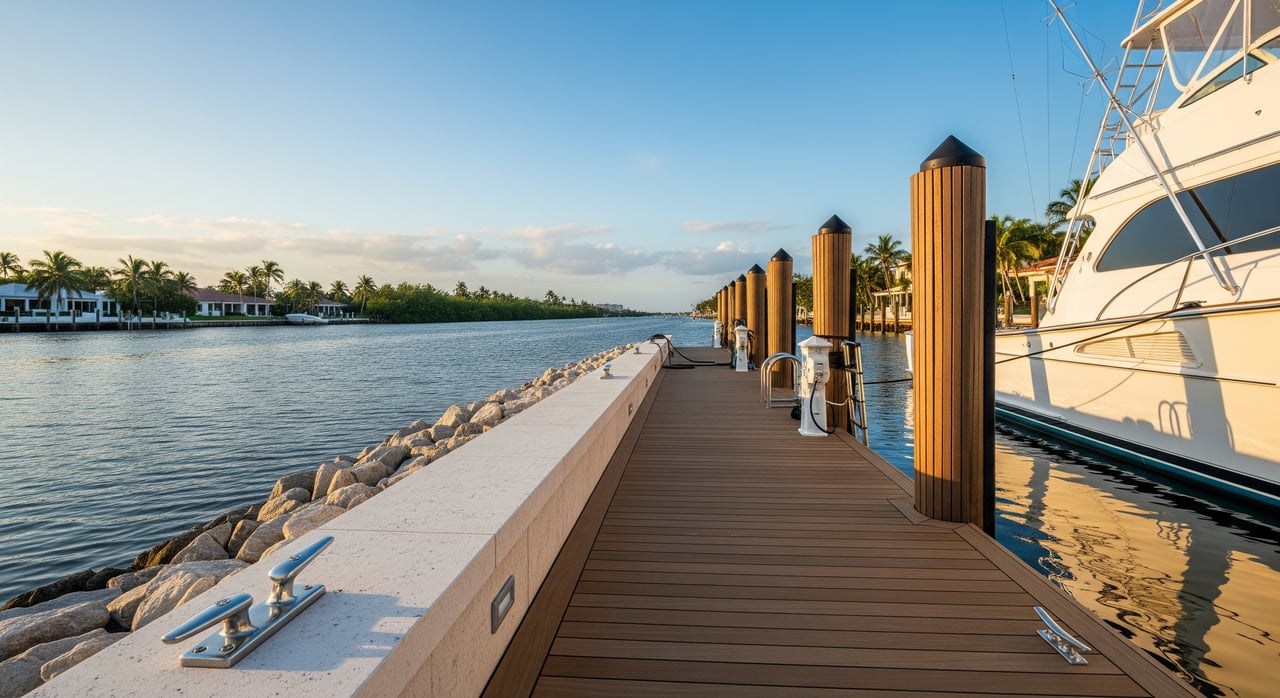
- Private fixed docks on pilings with a deck surface.
- Floating docks connected by ramps that adjust with tides.
- Finger piers or full-length docks, depending on lot and canal layout.
- Boat lifts mounted on pilings or integrated with the dock, operated manually or with electric or hydraulic systems.
Sizing for your boat and canal
Design starts with water depth at mean low tide, the canal’s turning radius, and your boat’s beam and draft. Shallow canals may require a longer dock or lift to reach deeper water. Canal width, navigation rules, and any municipal or HOA limits may restrict overall boat size and placement. Confirm these practical limits before you buy a property or select a boat.
Maintenance, insurance, and storm prep
Inspect pilings, fasteners, decking, and all lift components, including electrical systems. Homeowner policies may include some dock coverage, but limits and exclusions vary. Boat insurance is separate. Before hurricane season, secure lifts and docks according to contractor guidance. Some projects include permit conditions that require specific anchoring or resilience features.
Permits and environmental rules
Who regulates what
Multiple agencies can be involved, depending on your project:
- City of Lighthouse Point Building and Planning: local building permits, setbacks, and codes.
- Broward County environmental and planning: shoreline and environmental review, and in some cases canal responsibilities.
- Florida Department of Environmental Protection: state permits for work in state waters, mangrove protection, and Coastal Construction Control Line issues on the Atlantic coast.
- South Florida Water Management District: permits when projects affect water flows or wetlands.
- U.S. Army Corps of Engineers, Jacksonville District: federal permits for structures or dredging in navigable waters.
- FEMA and the National Flood Insurance Program: flood maps and base flood elevations that influence design and insurance.
A typical permitting path
- Start with a pre-application conversation with city and county staff.
- Engage a professional for design and engineering, plus a boundary survey showing mean high and low water lines.
- Submit local building permits and any needed county, state, or federal applications.
- Complete environmental reviews for mangroves, seagrass, and any dredging. Mitigation may be required.
- Expect inspections during construction and final approvals at the end.
Timeframes and fees
Simple projects may move in weeks to a few months, while projects that involve state and federal approvals, dredging, or sensitive habitats can take several months or longer. Plan for permit fees, engineering and consultant costs, and possible mitigation expenses.
Sensitive habitats and water quality
Mangroves are protected and trimming or removal is regulated. Seagrass impacts and shading from docks are closely reviewed. Turbidity and silt controls are commonly required during construction. Resilience and sea level rise are increasingly considered in approvals and design elevations.
Sea level rise and long-term planning
Broward County’s resilience planning encourages you to consider future water levels when designing shoreline structures. Resources such as county sea level documents, NOAA scenario viewers, and FEMA flood maps can help you visualize risk and set elevations. The practical takeaways are simple: design for higher water, build for adaptability, and budget for recurring maintenance and potential upgrades like raising caps or modifying dock heights.
Buyer and seller playbook
If you are buying
- Request a recent seawall inspection report from a qualified marine contractor or engineer.
- Obtain a current survey with mean high and low water lines and dock locations relative to property lines.
- Ask for permit records for the seawall, dock, lifts, and any prior repairs.
- Review any dredging or mangrove trimming documents and required mitigation.
- Confirm canal depth, width, turning radius, and any municipal or HOA limits on boat size and dock dimensions.
- Check insurance requirements for the property and your boat.
- Plan post-storm procedures for lifts and docks.
If you are selling
- Disclose known material defects and share inspection reports when available.
- Gather permits and documentation for existing structures and repairs.
- Consider addressing major structural issues that could hinder financing or insurance.
- Get two or more local contractor estimates to support pricing or credits.
- Compile photos and condition notes that may help with insurance and buyer confidence.
Next steps in Lighthouse Point
Whether you plan to keep a center console on a lift or moor a larger vessel, your waterfront improvements deserve careful review. Start early with inspections, confirm responsibilities and permits, and design with resilience in mind. If you want a smooth transaction and trusted referrals to local marine pros, connect with a team that lives and breathes waterfront.
For tailored guidance on your Lighthouse Point property, reach out to The Chad Bishop Group to Request a White Glove Consultation or get your home valuation.
FAQs
Who maintains private seawalls in Lighthouse Point?
- In most cases, the waterfront property owner maintains the private seawall and dock, but verify responsibilities through title, local ordinances, and any easements.
How often should I inspect a seawall before buying a home?
- Obtain a recent professional seawall inspection during due diligence and visually monitor for movement, cracks, or scour after major storms.
Do docks and boat lifts transfer with the property at closing?
- They usually transfer unless excluded in the contract; confirm on the survey and in the purchase agreement.
Can I dredge my canal area to improve boat access?
- Dredging is tightly regulated and may require city, county, state, and federal permits; private dredging is complex and often owner-funded.
How long do permits take for a new dock or lift in Lighthouse Point?
- Simple local permits can take weeks to a few months; projects involving state or federal approvals or environmental impacts can take several months or longer.
Are there limits on boat size for Lighthouse Point canals?
- Practical limits come from canal width, depth, and turning radius, plus any municipal or HOA rules; confirm before purchase.
Will my homeowner’s insurance cover dock and lift damage?
- Policies can include some dock coverage with limits and exclusions; boat insurance is separate, so review both with your carrier.
Should I repair a failing seawall before listing my home?
- Significant structural issues often need correction to satisfy buyers, lenders, or insurers; minor items may be handled with disclosure or credits based on estimates.